How to Properly Inspect Coil Mixing Kettles: 4 Key Points for Efficient, Trouble-Free Operation
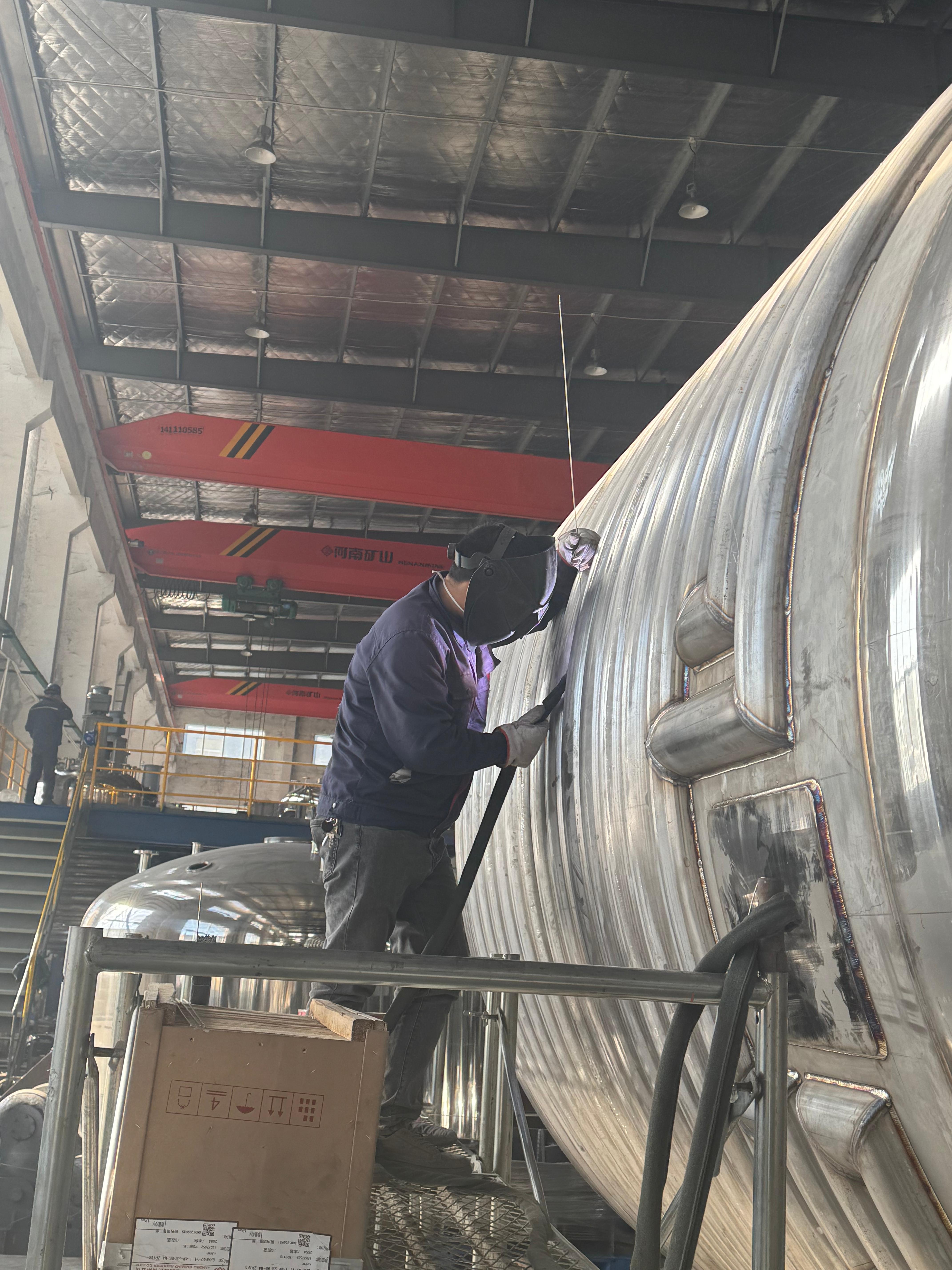
Coil mixing kettles serve as core equipment in chemical, food, and pharmaceutical industries. After extended operation, issues like coil scaling, seal leakage, and stirring abnormalities commonly occur. Following scientific inspection procedures is essential for restoring equipment performance and avoiding safety risks.
I. Pre-Inspection: Safety and Material Preparation
Safety Shutdown Procedures: - Cut power and display warning signs - Close inlet/outlet and coil valves - Release kettle pressure - For toxic/flammable media: Purge with inert gas (oxygen content ≤19.5%)
Material Preparation: - Tools: Torque wrench, flaw detector, pressure pump - Parts: Compatible seals and gaskets - Documents: Equipment drawings and maintenance records - Site: Clear area with passages ≥1.2m wide
II. Core Component Inspection
Coil System: Heat Transfer & Leak Prevention 1. Clean deposits (high-pressure water or solvent, avoid scraping) 2. PT/RT inspection of welds; repair cracks with re-inspection 3. Pressure test at 1.2× working pressure with clean water for 1 hour 4. Pass criteria: Pressure drop ≤0.05 MPa with no leakage
Stirring System: Stable Operation & Reduced Vibration 1. Measure shaft wear (allowable deviation ≤0.1mm) 2. Check impeller for cracks/deformation 3. Verify gap with kettle bottom (within ±5mm of design) 4. Calibrate coupling concentricity: - Radial runout ≤0.05mm - End face runout ≤0.03mm
Sealing Device: Prevent Media Leakage 1. Disassemble and clean seal components 2. Check dynamic/static ring surfaces (scratches >0.02mm require replacement) 3. Replace aged or deformed O-rings 4. Reassemble ensuring ≥95% ring surface contact 5. Tighten cover bolts diagonally in sequence 6. Manual rotation test: No jamming
III. Inspection Safety Management
- Confined space work requires permit and external monitoring
- Use explosion-proof tools for hazardous atmospheres
- Hot work requires permit with fire safety equipment ready
- Wear appropriate PPE for corrosive media contact
IV. Post-Inspection Verification
No-Load Test (2 hours): - Motor bearing temperature ≤80°C - Kettle vibration ≤4.5mm/s - Noise ≤85dB
Loaded Test (4 hours): - No seal leakage - Material mixing deviation ≤5% - Heat transfer efficiency deviation ≤±2°C
Documentation: Archive inspection forms, replacement lists, and test data for ≥3 years.