Stainless Steel Mixing Tank: Materials, Specs and Industrial Applications
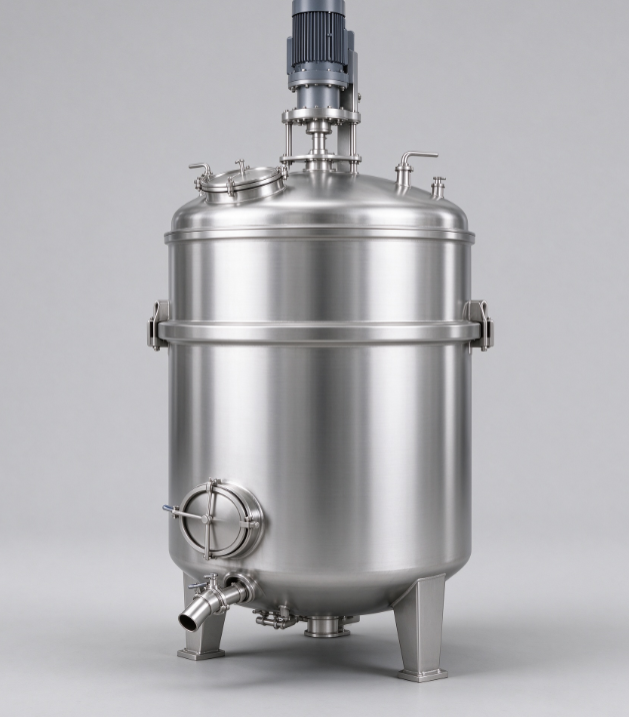
Table of Contents
1. Introduction
2. Core Structure and Working Design
3. Stainless Steel Material Performance Comparison
4. Standard Technical Specifications
5. Key Functional Advantages
6. Common Industrial Applications
7. Daily Operation & Maintenance Tips
8. Industry FAQ
Introduction
Industrial liquid processing need stable and hygienic mixing equipment. Ordinary plastic or iron tanks cannot meet long-term corrosion and sanitary standards.
Stainless steel mixing tank is a standard industrial processing vessel. It mix liquid, powder and emulsion materials for uniform production batches.
These industrial mixing tanks support heating, stirring and temporary storage functions. It fit small batch and large-scale continuous production lines.
Food grade stainless steel structure avoid material contamination. It comply with global industrial hygiene and safety rules.
Core Structure and Working Design
Tank Body Design
Most stainless steel mixing tank adopt cylindrical main body. Flat, conical or elliptical bottom options match different discharging needs.
Tank wall thickness range from 2mm to 8mm. Thicker walls suit high-pressure and large-capacity working conditions.
Agitation and Auxiliary Parts
Top-entry agitator install on tank cover. Common blade types include anchor type, paddle type and high shear homogenizer.
Jacket heating structure support steam or electric heating. It control material temperature during mixing process.
Manhole, observation window and discharge valve make daily operation and cleaning more convenient.
Stainless Steel Material Performance Comparison
Material grade decide tank durability, hygiene level and application scope. The table below list verified industry standard data for mainstream stainless steel mixing tank materials.
Material Grade | Corrosion Resistance | Max Working Temperature | Hygiene Level | Service Life | Best Application |
SS304 | Good (weak acid & alkali resistant) | 120°C | Food Grade Standard | 8–12 years | Food, beverage, cosmetic production |
SS316 | Excellent (acid & salt resistant) | 135°C | Medical & Pharmaceutical Grade | 15–20 years | Chemical, pharmaceutical, marine environment |
SS316L | Superior (anti-rust in humid condition) | 140°C | Ultra-Hygienic Grade | 20+ years | Sterile medical and high-purity processing |
SS304 stainless steel mixing tank is the most cost-effective option. It meet most daily food and cosmetic production standards.
SS316 and 316L tanks work better in harsh environments. It resist chemical erosion and high temperature aging effectively.
Standard Technical Specifications
Standard tank capacity cover 50L to 50000L. Manufacturers customize size based on production output.
Agitator rotating speed adjust from 0 to 1450 rpm. It handle low viscosity liquid and high viscosity paste materials.
Heating jacket support stable temperature control. Temperature error keep within ±2°C during operation.
All welding parts adopt seamless polishing. Inner surface roughness ensure no material residue accumulation.
Key Functional Advantages
Stainless steel mixing tank have smooth inner surface. It clean easy and avoid bacterial growth.
Integrated welding structure have good airtightness. It prevent external dust and impurities from entering.
Adjustable stirring speed suit different material mixing needs. Mixing uniformity rate reach over 98% for standard liquid materials.
High temperature and corrosion resistance reduce equipment failure rate. It support long-term continuous operation.
Common Industrial Applications
Food and beverage industry use stainless steel mixing tank for syrup, juice and dairy product blending.
Cosmetic manufacturing adopt high shear mixing tanks for lotion, cream and essential oil emulsification.
Pharmaceutical industry use SS316L sterile mixing tanks for medical liquid and reagent preparation.
Chemical factories rely on corrosion-resistant mixing vessels for solvent and chemical liquid mixing.
Daily Operation & Maintenance Tips
Clean tank inner wall after each production batch. Remove residual material to avoid cross contamination.
Check agitator motor and blade status regularly. Abnormal noise indicate part wear or loose connection.
Do not exceed rated working temperature and pressure. Overload operation shorten tank service life.
Polish welding joints periodically. Keep inner surface smooth for long-term hygienic production.
Industry FAQ
1. What is a stainless steel mixing tank?
It is a hygienic industrial mixing vessel made of stainless steel. It stir, blend and process liquid, paste and powder materials in various production lines.
2. What is the difference between SS304 and SS316 mixing tanks?
SS316 stainless steel have better chemical and salt corrosion resistance. It has longer service life than SS304, suitable for pharmaceutical and chemical scenarios.
3. Can stainless steel mixing tanks work for high viscosity materials?
Yes. Equip with anchor agitator or high shear homogenizer. It mix cream, paste and other high viscosity materials evenly.
4. Is stainless steel mixing tank easy to clean?
Yes. Polished inner surface leave no residue dead corners. Simple water washing and disinfection complete daily cleaning work.